

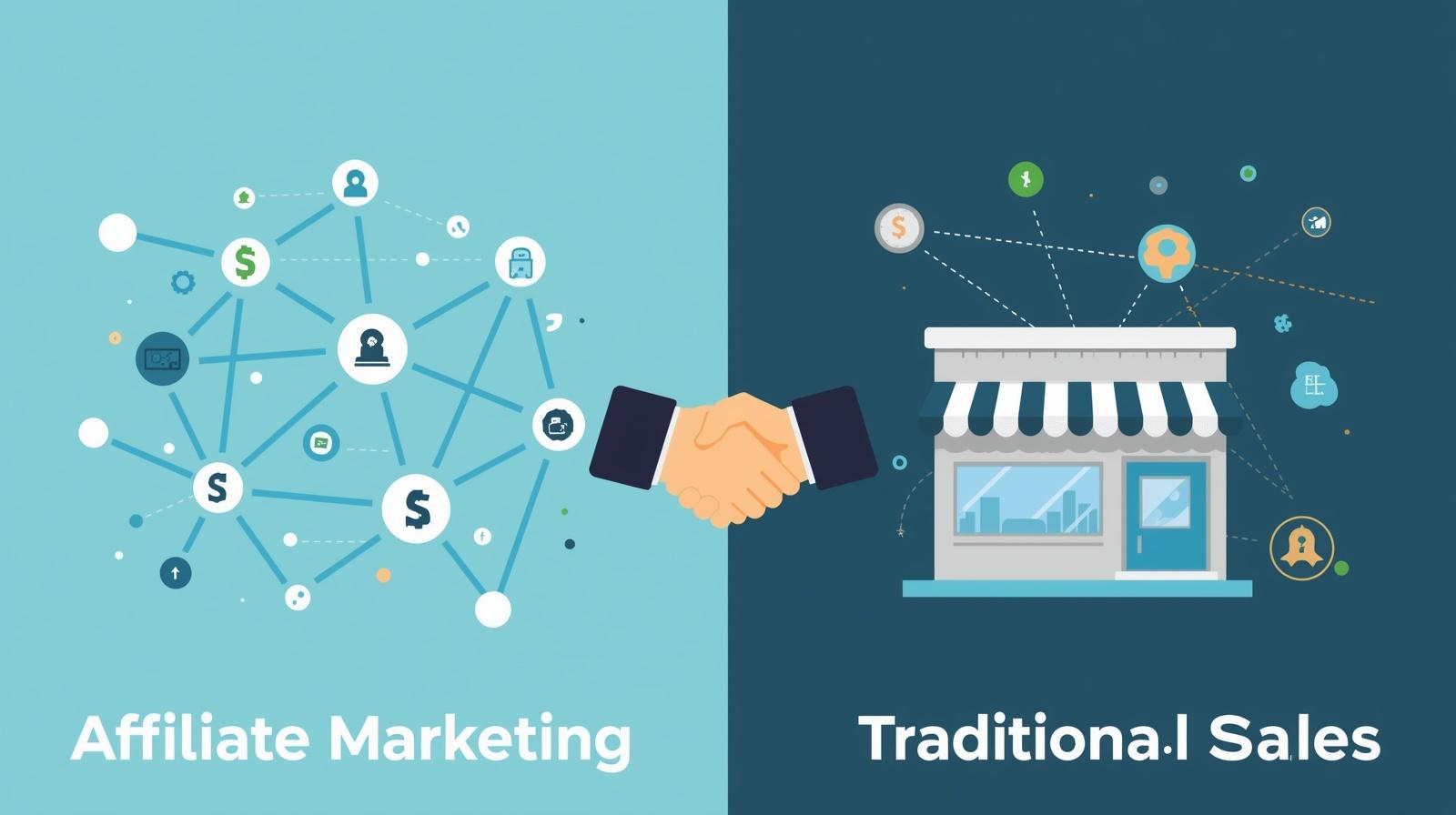
Affiliate Marketing vs Traditional Sales
Before diving into the details, lets look at this, here are the core points to remember regarding Affiliate Marketing vs Traditional Sales in 2026:
-
Scalability: When comparing Affiliate Marketing vs Traditional Sales, affiliate models offer much faster global reach with lower overhead.
-
Risk Management: A major benefit in the Affiliate Marketing vs Traditional Sales debate is that affiliate marketing is performance-based, meaning you only pay for results.
-
Control: In the world of Affiliate Marketing vs Traditional Sales, traditional methods provide more direct control over the customer relationship and brand messaging.
-
Cost of Entry: Starting with Affiliate Marketing vs Traditional Sales usually shows that affiliate marketing requires significantly less upfront capital.
-
Final Verdict: Ultimately, your choice between Affiliate Marketing vs Traditional Sales should depend on your specific product and long-term growth strategy.
The “Sales Funnel” was a straightforward machine: you spent money on ads, shouted at a crowd, and hoped a small percentage would buy. But as we move further into 2026, that machine is breaking. Between AI-filtered search results and a massive decline in consumer trust toward corporate advertising, the “Affiliate Marketing vs Traditional Sales.” model is facing an identity crisis.
Meanwhile, Affiliate Marketing has evolved and amazing from a “side hustle” into the backbone of the digital economy. If you are a business owner or a marketer, understanding the gap between these two models isn’t just about strategy—it’s about survival.

The Trust Deficit: Why Traditional Sales is Struggling
Traditional sales (think TV spots, cold calling, and aggressive Meta ads) operate on a “disruption” model. You are interrupting someone’s day to tell them your product is great.
The problem? In 2026, consumers are smarter. We don’t trust the brand that says, “We are the best.” We trust the person who says, “I used this, and it actually worked.” Traditional sales have a high-friction entry point—you pay for the lead before you ever prove the value.
The Affiliate Edge: Performance-Based Precision
Affiliate marketing in 2026 isn’t about spamming links. It’s about Contextual Authority. Here is why it is winning:
The “Zero-Risk” Ledger: In traditional sales, your budget can vanish with zero ROI. In affiliate marketing, the brand only pays for a successful conversion.
The Credibility Bridge: An affiliate isn’t a salesman; they are a filter. By the time a customer clicks an affiliate link, 80% of the “selling” is already done through trust.
Hyper-Niche Targeting: While traditional ads try to find an audience, affiliates own the audience. Whether it’s high-ticket SaaS or specialized eco-tech, there is an affiliate who speaks that specific “language.”
2026 Comparison: At a Glance
The Verdict: Where Should You Pivot?
If you want to rank on Page 1 and build a sustainable brand on Marketing Glob Hub, the answer isn’t to pick one and ignore the other. It’s to use Affiliate strategies to fuel your sales. In 2026, the most successful brands are those that stop “selling” and start “partnering.” The traditional sales floor is being replaced by a global network of digital creators who prioritize transparency over a quick commission.
SEO Implementation Tips for You:
Keywords: Use the bolded terms like Performance-Based Precision and Contextual Authority as H3 headers.
Rank Math Tip: Since we checked your schema earlier, make sure to add an FAQ Schema to this post asking “Is affiliate marketing better than traditional sales?” for an extra boost.
What Affiliate Marketing Looks Like in 2026
Affiliate marketing in 2026 isn’t just about dropping random links on a blog and hoping for clicks. It has matured into a content-driven, trust-based ecosystem. At its core, affiliate marketing is still simple: you promote someone else’s product, and you earn a commission when someone buys through your link. But the way it’s done today is far more sophisticated.
Creators now build entire brands around niches—whether it’s AI tools, fitness, finance, or gaming. Instead of “selling,” they educate, review, and guide their audience. Think about it: when was the last time you bought something without checking reviews or watching a quick YouTube video first? Exactly. Affiliate marketers thrive in that decision-making phase.
Another major shift is the rise of recurring commissions. Many tools and platforms (especially SaaS products) pay affiliates monthly as long as the customer stays subscribed. That means one piece of content—say a blog post about the “best email marketing tools”—can generate income for months or even years.
What makes affiliate marketing especially powerful today is its low barrier to entry. You don’t need inventory, a warehouse, or even a customer support team. Your job is to connect people with the right solutions. If you can build trust and drive traffic, the rest becomes a system.
How Traditional Sales Still Holds Its Ground
Now, before declaring affiliate marketing ultimately the winner, it’s important to recognize that traditional sales hasn’t disappeared—it has simply adapted.
Traditional sales still dominate industries where high-ticket deals, customization, and human interaction matter. Think enterprise software, real estate, consulting services, or B2B contracts. In these areas, buyers often need reassurance, negotiation, and tailored solutions—something a simple affiliate link can’t provide.
Sales teams today are also more tech-driven than ever. CRM systems, AI-powered lead scoring, and automation tools have made the process faster and more efficient. Salespeople are no longer just “pitching”—they’re analyzing data, understanding customer behavior, and building long-term relationships.
There’s also something timeless about human connection. A skilled salesperson can read emotions, handle objections in real time, and close deals that would otherwise fall apart. That’s a level of nuance that affiliate marketing, for all its strengths, doesn’t fully replicate.
In other words, traditional sales still thrives where trust needs to be built face-to-face or through direct interaction.
The Core Differences That Actually Matter
At a glance, affiliate marketing and traditional sales might seem like two completely different worlds. But when you zoom in, the real differences come down to a few key areas: approach, scalability, cost, and relationship dynamics.
Affiliate marketing is pull-based. You create content that attracts people who are already searching for solutions. Traditional sales, on the other hand, is often push-based, where outreach, cold calls, and direct pitches initiate the conversation.
Scalability is another major difference. With affiliate marketing, one blog post or video can reach thousands—or even millions—of people without extra effort. Traditional sales usually scales by adding more people to the team, which increases costs.
Speaking of cost, affiliate marketing is relatively lean. You don’t need to create products or manage logistics. Traditional sales involves salaries, training, tools, and operational expenses.
But here’s where things get interesting: control. In traditional sales, you control the product, pricing, and customer experience. In affiliate marketing, you’re dependent on the company you’re promoting. If they change their commission structure or shut down their program, your income can take a hit.
So it’s not about which model is better—it’s about which model fits your goals, skills, and risk tolerance.
A Side-by-Side Comparison
Here’s a clearer picture of how these two models stack up:
Factor Affiliate Marketing Traditional Sales
Startup Cost Low Medium to High
Scalability High Moderate
Income Model Commission-based (often recurring) Salary + commission or profit margins
Control Limited Full control
Skill Focus Content, SEO, audience building Communication, negotiation, closing
Risk Level Platform and program dependency Operational and financial risk
This table doesn’t tell the whole story, but it highlights the practical differences that affect daily work and long-term growth.
Why Affiliate Marketing Is Exploding Right Now
There’s a reason affiliate marketing feels like it’s everywhere in 2026. It aligns perfectly with how people consume information today.
Modern consumers don’t like being sold to—they prefer to discover solutions organically. They read blog posts, watch reviews, and compare options before making decisions. Affiliate marketers sit right in the middle of that journey.
Another factor is the creator economy. Millions of people are building audiences on platforms like YouTube, TikTok, and newsletters. Affiliate marketing gives them a natural way to monetize without creating their own products.
There’s also the flexibility factor. Affiliate marketers can work from anywhere, choose their niche, and build at their own pace. For many, that freedom is more appealing than traditional sales roles with quotas and targets.
And let’s not ignore the compounding effect. A well-ranked article or viral video can keep generating traffic—and income—long after it’s created. That’s something traditional sales rarely offers.
Where Traditional Sales Still Wins
Despite the growth of affiliate marketing, traditional sales still has clear advantages in certain areas.
First, high-value transactions. When deals involve thousands—or even millions—of dollars, people want direct interaction. They need reassurance, customization, and detailed explanations.
Second, brand authority. Companies that control their own sales processes can shape the entire customer experience, from the first contact to post-sale support. That level of control builds long-term brand equity.
Third, predictability. Sales teams operate with structured pipelines, targets, and forecasts. Affiliate income, while scalable, can sometimes fluctuate due to algorithm changes, competition, or market shifts.
There’s also the matter of relationship building. In industries like consulting or enterprise solutions, relationships often matter more than marketing. A single strong connection can lead to years of business.
The Hybrid Future: Where Things Are Headed
Here’s the part most people overlook—it’s not a battle between affiliate marketing and traditional sales. The future is a blend of both.
Many companies now use affiliate marketing to generate leads and awareness, then rely on sales teams to close high-value deals.