As we move deeper into 2026, digital marketing continues to evolve at a breakneck pace. What worked just a couple of years ago may now be outdated, and emerging technologies are reshaping how brands connect with their audiences. Businesses that adapt early gain a competitive edge, while those that ignore major trends risk falling behind.
Why the 7 Game Changing Digital Marketing Trends for 2026 Matter
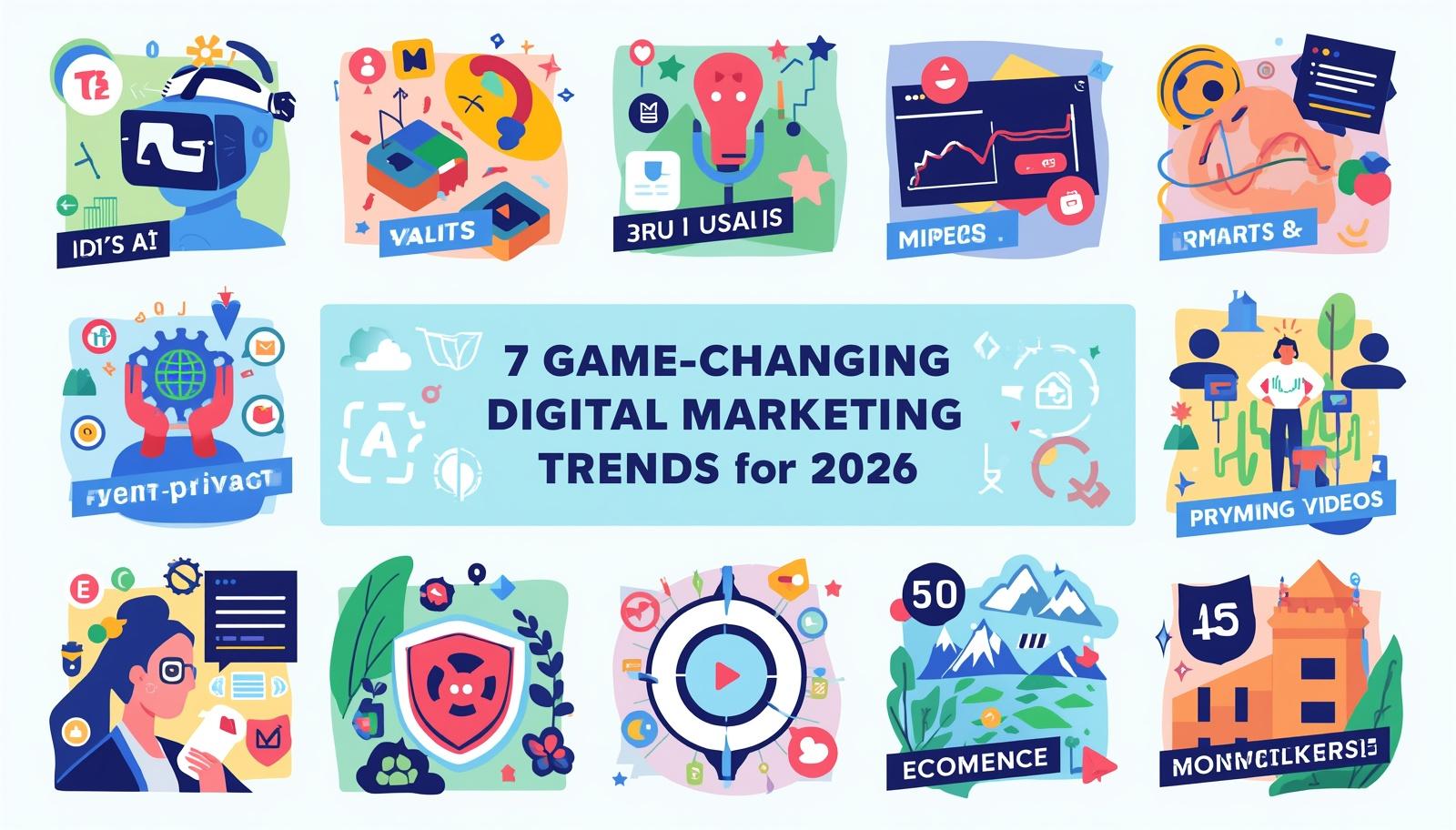
Here are the top 7 digital marketing trends in 2026 that every marketer needs to understand and embrace.
1. AI‑Driven Personalization Will Become Standard
Artificial Intelligence (AI) has been a buzzword for years, but in 2026, it’s no longer a “nice‑to‑have” — it’s a must‑have.
Gone are one‑size‑fits‑all marketing campaigns. Today’s consumers expect highly tailored experiences based on their behaviors, preferences, and past interactions. AI tools now power personalization in every channel:
Dynamic website content that changes based on user history
Customized email journeys that adapt in real time
Predictive product recommendations that feel intuitive
What’s particularly game‑changing is AI’s ability to process massive datasets and deliver meaningful insights. Instead of manually segmenting audiences by age or location, marketers can now segment based on intent, mood, purchasing patterns, and even emotional responses.
Why it matters: Personalization boosts engagement, increases conversions, and builds loyalty. According to multiple industry studies, personalized experiences can increase revenue by as much as 15–20% — and that number is expected to rise as AI becomes more sophisticated.
Understanding the 7 Game Changing Digital Marketing Trends for 2026 will help businesses adapt and grow in the digital era.
2. The Rise of Immersive Experiences: AR, VR & the Metaverse
In 2026, immersive digital experiences are no longer science fiction — they’re mainstream tools for engagement.
Augmented Reality (AR)
AR lets users visualize products in real life through their devices. For example:
Trying furniture in your living room before buying
Previewing how makeup looks on your face
This technology has proven especially powerful in retail, real estate, and education.
Virtual Reality (VR) & the Metaverse
Virtual experiences — whether a branded VR showroom or a fully interactive event in the metaverse — offer depth that traditional media can’t match. Brands are using these platforms to:
Host virtual events and conferences
Create gamified brand experiences
Build communities in shared digital spaces
Why it matters: Immersive tech builds deeper emotional connections. It breaks the barrier between observation and experience, which boosts brand recall and loyalty like never before.
3. Voice and Conversational Marketing Takes Center Stage
Smart speakers, voice assistants, and conversational AI are changing how users search and interact with brands.
In 2026:
More people are using voice search for shopping, information, and navigation
Conversational agents (like chatbots and voice assistants) handle complex customer queries
Real‑time messaging and voice interfaces are replacing traditional forms
Consumers now expect instant answers and seamless dialogue — and brands that can deliver conversational interactions gain trust and satisfaction.
Tip for marketers: Optimize your content for voice search. This means focusing on conversational keywords and natural language that mimic how people actually speak — not how they type.
4. Video Continues Its Dominance — But Short‑Form Content Rules
Video has been a dominant form for a while, and in 2026 it’s still growing — especially short‑form formats.
Platforms like TikTok, Instagram Reels, and Shorts have trained audiences to expect:
Quick, snackable content
Story‑driven visuals
Content that entertains and informs
Long‑form video still matters — especially for deep educational content — but short clips are driving engagement and discovery at unprecedented rates.
The Brands could be succeed in 2026 :
Create purpose‑driven, authentic video content
Showcase passion and personality (not just product features)
Use video analytics to refine messaging and deliver the right content at the right time
Why it matters: Short video increases retention and share ability. Not only does it keep audiences watching longer, but it also fuels organic reach more effectively than static media.
5. Privacy‑Forward Marketing and Data Ethics
With data protection regulations evolving worldwide, consumers are increasingly concerned about how their data is collected and used.
In 2026:
First‑party data is more valuable than ever
Cookie tracking and third‑party data are declining
Consumers expect transparency and control
This shift has forced marketers to rethink traditional tracking methods. Instead of sending intrusive ads based on every user click, forward‑looking brands are:
Building trust through clear data policies
Offering value exchanges (e.g., incentives for sharing preferences)
Using AI to interpret behavior without invasive tracking
Why it matters: Respecting privacy isn’t just a legal obligation — it’s a competitive advantage. Customers who trust a brand are far more likely to engage, convert, and remain loyal.
6. Content Powered By Purpose (Not Just SEO)
In 2026, content marketing is finally shedding its outdated reputation as merely “keyword stuffing.”
Search engines have become smarter. Today’s algorithms understand:
Context
Intent
Relevance
Authenticity
That’s why the highest‑performing content is not just optimized for search — it’s meaningful.
This means:
Articles that answer real questions
Stories that reflect human experiences
Content that aligns with brand values and community interests
Brands that invest in purpose‑driven content see benefits beyond rankings — they build credibility, trust, and emotional connection.
Example: Rather than writing “Top 10 shoes,” a brand might publish “How to Choose Shoes That Improve Your Foot Health” — content that genuinely helps rather than simply sells.
7. Integrated Omnichannel Marketing Becomes the Norm
The customer journey in 2026 is not linear — it’s a fluid experience across devices, platforms, and media.
Customers bounce between:
Search engines
Social media
Messaging apps
In‑store experiences
Voice assistants
What matters most is cohesion.
Omnichannel marketing means:
A consistent brand message across platforms
Seamless transitions between online and offline touchpoints
Data systems that connect customer behavior everywhere they interact with the brand
This trend reflects a broader truth: consumers no longer distinguish between channels — they just want a unified experience.
Why it matters: Omnichannel strategies improve conversion rates, increase customer satisfaction, and reduce friction in the buyer’s journey.
How to Prepare for These Trends in 2026
Knowing these trends is only the first step — applying them effectively is where real success begins.
Here are practical steps marketers can take now:
1. Invest in Next‑Gen Tools
AI‑enabled platforms, customer data platforms (CDPs), and immersive tech tools are no longer optional — they are critical infrastructure.
2. Prioritize Customer Feedback
Real insights come from customer behavior and sentiment. Use surveys, social listening, and analytics to steer strategy.
3. Train Your Teams in Emerging Skills
From AI literacy to video production, marketers must evolve their skill sets.
4. Build Ethical Data Practices
Privacy must be woven into every campaign. Start with transparency and offer users control over their data.
5. Experiment and Adapt Quickly
The digital landscape changes fast. Testing, learning, and pivoting should be built into your marketing operations.
Final Thoughts
2026 presents an exciting moment for digital marketing — one rooted in technological innovation and human connection.
While new tools like AI, AR/VR, and immersive platforms are transforming capabilities, the core principle remains the same:
Successful digital marketing solves real problems, builds trust, and enriches human experiences.
By embracing these trends thoughtfully and intentionally, brands can not only survive but thrive in this dynamic digital era.