What Are the Benefits of Traditional Marketing?Introduction
Traditional marketing remains an important way for businesses to promote their products and services through offline channels. Unlike digital marketing, which uses websites, search engines, and social media, traditional marketing relies on methods such as television advertisements, newspapers, radio, billboards, flyers, and direct mail.
The benefits of traditional marketing include reaching local audiences, building brand awareness, creating physical promotional materials, and connecting with customers through familiar advertising channels. However, its effectiveness depends on the target audience, marketing budget, and campaign goals.
Marketing is like the heartbeat of any business—without it, growth becomes nearly impossible. While digital marketing gets a lot of attention today, traditional marketing still holds a powerful place in the business world. From TV ads to billboards and flyers, these methods have shaped consumer habits for decades. But what makes traditional marketing still so valuable in today’s digital-first age? Let’s dig in.
In this guide, you’ll learn about the main benefits of traditional marketing, common traditional marketing channels, real-world examples, limitations, and ways to combine traditional and digital marketing. If you’re building your overall marketing strategy, you can also follow our Beginner Digital Marketing Roadmap 2026 for a step-by-step approach.
Understanding Traditional Marketing
Traditional marketing refers to the old-school, offline methods of promoting products or services. It includes advertising through newspapers, magazines, TV, radio, direct mail, and billboards. Basically, it’s the kind of marketing that doesn’t rely on the internet.
What Is Traditional Marketing?
Traditional marketing refers to offline methods businesses use to promote their products, services, or brands.
Common traditional marketing channels include:
- Television advertising
- Radio advertising
- Newspapers and magazines
- Billboards and outdoor advertising
- Flyers and brochures
- Direct mail
- Posters and signs
- Community events and sponsorships
- Telemarketing
Unlike digital marketing, these methods generally do not depend on internet-based platforms to deliver the initial promotional message.
Types of Traditional Marketing
Print Advertising
Print advertising includes newspapers, magazines, brochures, catalogs, business cards, and flyers. Businesses can use printed materials to communicate product information, promotional offers, contact details, and brand messages.
For example, a local restaurant can distribute flyers containing its menu, opening hours, location, and a special promotional offer.
Broadcast Advertising
Broadcast advertising includes television and radio commercials. Television combines visual and audio elements, while radio communicates through sound. TV commercials and radio spots reach millions daily. They’re powerful tools for mass communication. Businesses may use broadcast advertising when they want to communicate with a broad audience or reach people through specific local or regional media channels.
Outdoor Advertising
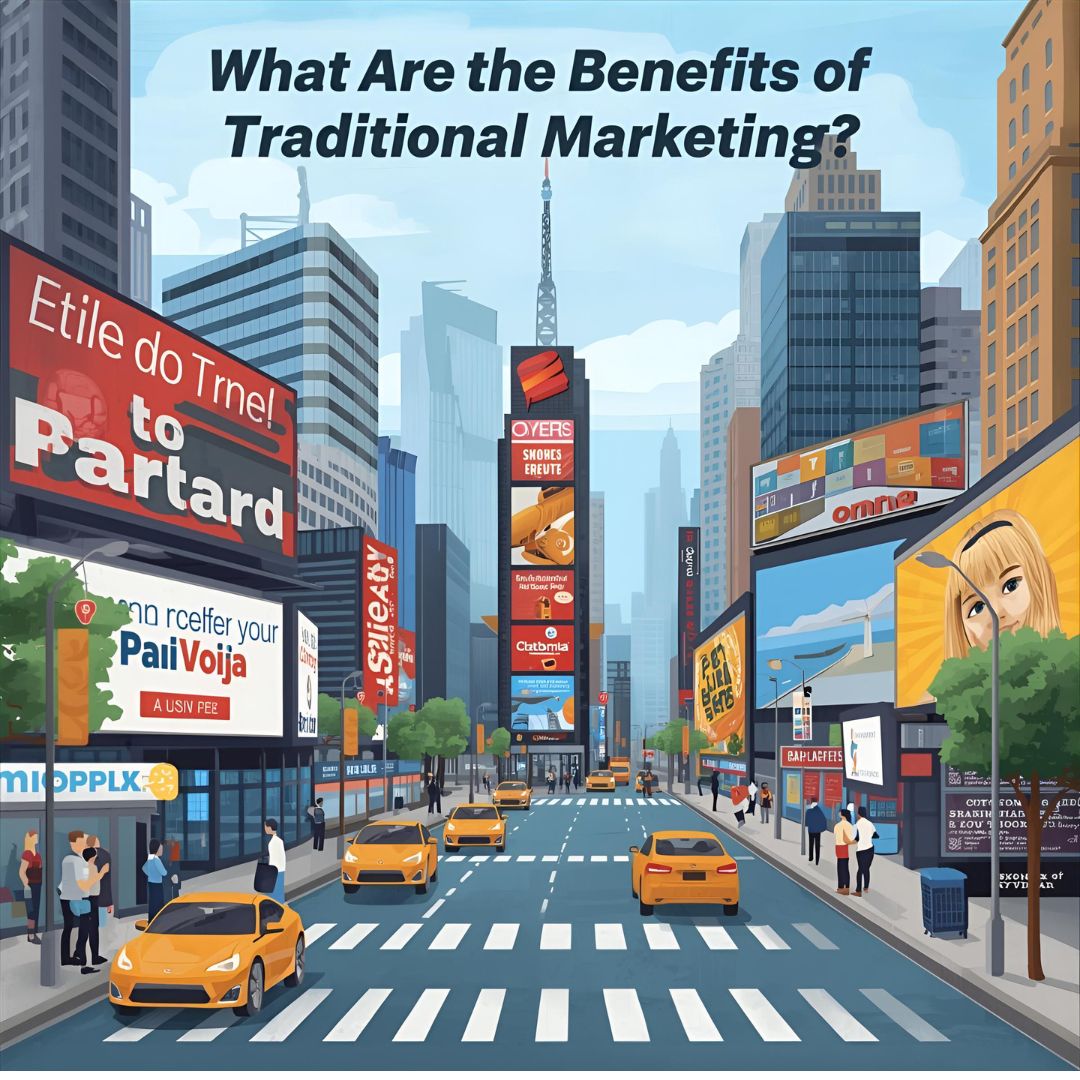
Outdoor advertising includes billboards, posters, banners, and signs placed in public locations. Businesses can use these methods to increase visibility among pedestrians and commuters. Billboards, posters, and banners grab attention in high-traffic areas, making them great for brand visibility.
Direct Mail
Direct mail involves sending promotional materials, such as postcards, catalogs, or brochures, to selected recipients. Catalogs, flyers, and postcards sent directly to homes create a personal touch. Businesses can use direct mail to communicate offers, announce new services, promote events, or provide information about a product.
Telemarketing
Telemarketing involves communicating with potential or existing customers by telephone. Businesses should follow applicable legal and privacy requirements when using this method. Phone calls might feel old-fashioned, but they’re still effective in direct selling and customer outreach. Businesses using telemarketing should follow the applicable telemarketing, privacy, and consumer-protection requirements in the markets where they operate.
The Enduring Benefits of Traditional Marketing
Wide Reach and Visibility
A single TV commercial can reach millions in seconds, and a billboard can be seen by thousands of commuters daily. Traditional marketing is unbeatable when it comes to visibility.
Builds Strong Brand Recognition
Consistent exposure through TV, radio, or print helps etch a brand into people’s minds. Think of Coca-Cola’s timeless ads—you remember them even today.
Tangibility and Trust Factor
Holding a flyer, reading a newspaper ad, or seeing a physical poster makes the message feel more credible. Tangibility builds trust.
Targets Local Audiences Effectively
Local newspapers, radio stations, and community posters allow small businesses to connect directly with nearby customers.
Easier to Understand for All Generations
Unlike digital platforms that may confuse older generations, traditional marketing is straightforward and easily understood.
Long-Lasting Impact
A printed magazine ad can last for weeks or months, unlike digital ads that vanish once the budget ends.
Higher Credibility
People often trust what they see on TV or read in newspapers more than random online ads.
Personal Connection
Face-to-face promotions, sponsorships, and events foster direct human interaction, which digital ads can’t replicate.
Benefits of Traditional Marketing
Traditional marketing can help businesses reach customers through offline channels and support broader marketing goals. Its effectiveness depends on the type of advertising, audience, location, budget, and campaign strategy.
1. Reaches Local Audiences
One of the benefits of traditional marketing is its ability to reach people in a specific geographic area. Local businesses can use community newspapers, flyers, radio advertisements, and outdoor signs to communicate with nearby customers.
For example, a restaurant opening a new location may distribute flyers in surrounding neighborhoods to share its opening date, menu, and promotional offers.
2. Builds Brand Awareness
Traditional advertising can increase exposure to a business name, logo, product, or service. Television commercials, billboards, radio advertisements, and print campaigns can introduce a brand to potential customers.
Consistent and relevant messaging may help people recognize a brand over time. However, brand awareness does not automatically lead to sales.
3. Creates Physical Marketing Materials
Printed materials such as brochures, business cards, catalogs, and flyers provide customers with something they can physically read or keep.
For example, a service provider can distribute a brochure explaining its services, contact information, and business hours.
4. Supports Personal Connections
Traditional marketing can include events, community sponsorships, face-to-face promotions, and direct customer interactions. These activities may help businesses communicate with customers in a personal setting.
For instance, a local business participating in a community event can introduce its products and answer customer questions.
5. Reaches Audiences Through Multiple Channels
Businesses can use different traditional marketing channels to reach people with varying media habits. Some audiences may regularly listen to radio, read local publications, or notice outdoor advertisements.
Choosing the right channel requires understanding where the target audience spends time and how they consume information.
6. Supports Repeated Brand Exposure
Traditional advertising campaigns can provide repeated exposure through billboards, recurring radio advertisements, or regularly distributed printed materials.
Repeated exposure may help reinforce brand recognition, but results depend on message quality, frequency, audience relevance, and campaign duration.
7. Can Complement Digital Marketing
Traditional and digital marketing can be used together as part of an integrated marketing strategy. For example, a business might promote an event through local flyers and direct customers to its website or social media page.
Using both channels allows businesses to connect offline promotions with online resources.
8. Reaches Specific Offline Audiences
Some businesses can use offline channels to communicate with audiences based on location, publication readership, or media consumption habits.
For example, a local retail shop or educational institution may choose advertising channels that reach people in its service area.
Traditional Marketing vs. Digital Marketing
It’s not about choosing one over the other. Traditional marketing works best when paired with digital strategies. While digital offers real-time tracking and affordability, traditional adds credibility, emotional connection, and mass exposure. The right approach depends on the business’s audience, goals, budget, and available resources. Some businesses may benefit from using both methods.
| Feature | Traditional Marketing | Digital Marketing |
|---|---|---|
| Main channels | TV, radio, print, billboards | Search, websites, social media |
| Audience targeting | Often based on location or media audience | Various online targeting methods |
| Measurement | Surveys, codes, and other tracking | Digital analytics and tracking tools |
| Campaign changes | May take time depending on the channel | Some campaigns can be changed quickly |
| Physical presence | Printed materials and offline promotions | Primarily online experiences |
Neither approach is automatically suitable for every business. Businesses should select channels based on their target audience and campaign objectives. Businesses using paid advertising can also explore our PPC Advertising Guide to understand how online paid search fits into a broader marketing strategy.
Traditional marketing includes offline methods such as television, newspapers, radio, and billboards. Digital marketing uses online channels such as search engines, websites, email, and social media. If you want to learn more, read our guide on digital marketing.
Real-Life Examples of Traditional Marketing Success
Local Restaurant
A restaurant may use flyers, outdoor signs, or local newspaper advertising to promote a new menu or special offer. The business could add a QR code, website address, or unique promotional code to help customers take action and make campaign results easier to track. For businesses that want to continue customer communication online, WhatsApp marketing for small businesses can also complement offline promotions.
Retail Store
A retail store may use posters, printed promotions, and local advertising to inform customers about seasonal discounts. The business can track results through unique promotional codes or customer feedback.
Real Estate Business
A real estate agency can use property signs, brochures, local publications, direct mail, and community advertising to reach people in specific areas.
The agency can include a phone number or website landing page to make inquiries easier to track.
Community Event
A business sponsoring a community event may use banners, printed materials, and face-to-face conversations to increase local visibility.
-
Coca-Cola: Its billboards and TV ads remain iconic.
-
Local Stores: Newspaper ads and flyers bring in consistent local customers.
Limitations of Traditional Marketing
Although traditional marketing offers several potential benefits, it also has limitations. Businesses should understand these challenges before choosing an advertising channel.
1. Some Channels Can Be Expensive
Television advertising, billboards, and large print campaigns may require significant budgets. Costs depend on location, production, audience, and advertising frequency.
2. Measurement Can Be More Difficult
Some offline campaigns do not provide the same direct digital tracking capabilities as online advertising. Businesses may need surveys, unique coupon codes, dedicated phone numbers, or sales comparisons to evaluate results.
3. Limited Flexibility in Certain Formats
Once printed materials are produced or an advertisement is scheduled, making changes may require additional time or costs.
4. Audience Targeting Varies
Traditional marketing channels offer different targeting options. Some may focus on geographic areas or broad media audiences.
5. Distribution Challenges
Printed materials can create distribution costs and waste if they are sent to people who are not interested in the offer. Businesses should compare costs, expected reach, and measurement options before launching a traditional marketing campaign.
If promotional materials are distributed to people who are unlikely to be interested in the product or service, part of the campaign budget may be less effective.
For this reason, businesses should compare expected reach, costs, audience relevance, and measurement options before launching a campaign.
How to Use Traditional Marketing Effectively
Businesses can follow these steps when planning a traditional marketing campaign.
1. Define Your Target Audience
Consider factors such as location, needs, interests, buying behavior, and the type of media they regularly use. Identify the customers you want to reach, including their location, interests, and potential needs.
2. Set a Clear Marketing Goal
Decide what the campaign should accomplish.
Possible goals include:
- Increasing brand awareness
- Generating inquiries
- Promoting a product
- Increasing local visibility
- Driving customers to a store
- Promoting an event
A clear objective makes it easier to evaluate campaign performance.
Businesses can also use technology to support campaign planning, content creation, and analysis. Our guide to the best AI marketing tools in 2026 covers tools that can help marketers with these tasks.
3. Choose the Right Channel
Select a suitable method, such as flyers, radio, print advertising, or outdoor advertising, based on your audience and budget. For example, a local business may consider flyers, local radio, posters, direct mail, or outdoor advertising.
4. Create a Clear Message
Use simple language to explain the product, service, offer, or action you want customers to take. Include important information such as the business name, offer, location, contact details, website, or desired call to action.
5. Add a Way to Measure Results
Use promotional codes, dedicated phone numbers, website landing pages, or customer surveys where appropriate.
Whenever possible, include a method for tracking responses.
Examples include:
- Promotional codes
- Dedicated phone numbers
- QR codes
- Landing pages
- Customer surveys
- Store-specific offers
Measurement can help businesses determine which channels are producing useful responses.
6. Review and Improve the Campaign
Compare campaign costs and results against your original goals. Use the findings to improve future marketing decisions. Use those findings to improve future campaigns.
Why Businesses Still Invest in Traditional Marketing
Even in 2025, businesses allocate a portion of their budget to traditional marketing because it continues to deliver results. The best approach today? A hybrid strategy—mixing traditional marketing’s credibility with digital marketing’s flexibility.
Is Traditional Marketing Still Effective in 2026?
Traditional marketing can still be useful in 2026 when businesses have audiences that can be reached effectively through offline channels.
Its usefulness depends on factors such as the target audience, marketing objective, budget, location, advertising format, and ability to measure results.
For some businesses, traditional marketing may work as a standalone channel. For others, it can complement digital marketing by connecting offline promotions with websites, social media, email, search, or other online resources.
The key is to choose marketing channels based on the business’s specific audience and objectives rather than assuming that one approach works for everyone.
Frequently Asked Questions
1. What are the main benefits of traditional marketing?
The main benefits of traditional marketing include reaching local audiences, building brand awareness, creating tangible promotional materials, providing repeated exposure, and supporting offline customer interactions.
Results depend on the marketing channel, target audience, campaign message, budget, and campaign objectives.
2. Is traditional marketing still effective in 2026?
Traditional marketing can still be useful in 2026 for businesses targeting audiences through offline channels. Its effectiveness depends on the target audience, marketing goals, budget, and advertising method. Its effectiveness depends on the audience, marketing goals, budget, location, and advertising method.
3. Can small businesses benefit from traditional marketing?
Yes. Small businesses may use flyers, posters, business cards, local advertising, community events, direct mail, and other offline methods to reach potential customers.
The business should select channels based on its audience and available budget.
4. What is the difference between traditional and digital marketing?
Traditional marketing uses offline channels such as television, print, radio, and billboards. Digital marketing uses online channels such as websites, search engines, email, and social media.
5. Is traditional marketing more expensive than digital marketing?
Costs vary by channel and campaign. Some traditional advertising formats may require substantial production or placement costs.
6. Can businesses combine traditional and digital marketing?
Yes. Businesses can combine offline advertising with online channels. For example, a printed advertisement can direct customers to a website or online contact form. For example, a printed advertisement can include a QR code that directs customers to a website, landing page, social media profile, or online offer.
7. What are the disadvantages of traditional marketing?
Potential disadvantages include higher costs for some channels, more limited measurement in certain formats, slower campaign changes, varying targeting capabilities, and distribution costs. Businesses should consider these factors before selecting a traditional marketing channel.
Conclusion
Traditional marketing remains a useful option for businesses that want to communicate with customers through offline channels. Its potential benefits include local reach, brand awareness, physical promotional materials, and personal customer interactions.
However, traditional marketing also has limitations, including costs, measurement challenges, and varying audience targeting options. Businesses should consider their goals, audience, and budget before selecting a marketing channel.
Combining traditional marketing with digital marketing may help businesses connect offline promotions with online resources. The most suitable strategy depends on each business’s needs and campaign objectives.